



Navigating the Divorce Process: A Step-by-Step Guide for Couples
Divorce can be a challenging and emotional journey for everyone involved. Understanding the process and knowing what to expect can help ease some of the stress and uncertainty. In England and Wales, the divorce process has changed significantly following the introduction of the “no-fault divorce” system under the Divorce, Dissolution, and Separation Act 2020.
The UK government has produced a comprehensive guide titled “Get a divorce: What happens after you apply,” which provides valuable insights into the steps following a divorce application. Below, we outline the key stages of the divorce process and how this guide can assist you. We also highlight when it is advisable to seek legal advice from a specialist family law solicitor.
Key Stages of the Divorce Process in the UK
Eligibility and Application:
- You must have been married for at least 12 months before applying for a divorce.
- The application can be filed individually or jointly with your spouse, citing the irretrievable breakdown of the marriage.
Under the no-fault divorce system, you no longer need to assign blame or provide evidence of wrongdoing, such as adultery or unreasonable behaviour. This aims to reduce conflict and make the process more constructive.
Applications are made online via the HMCTS divorce portal, and court fees currently apply.
Acknowledgement of Service:
- Once the application is submitted, your spouse will receive a copy and must respond within 14 days.
This step confirms that the respondent has received the divorce application and intends to proceed. If the application is joint, both parties confirm their intention to continue.
Conditional Order:
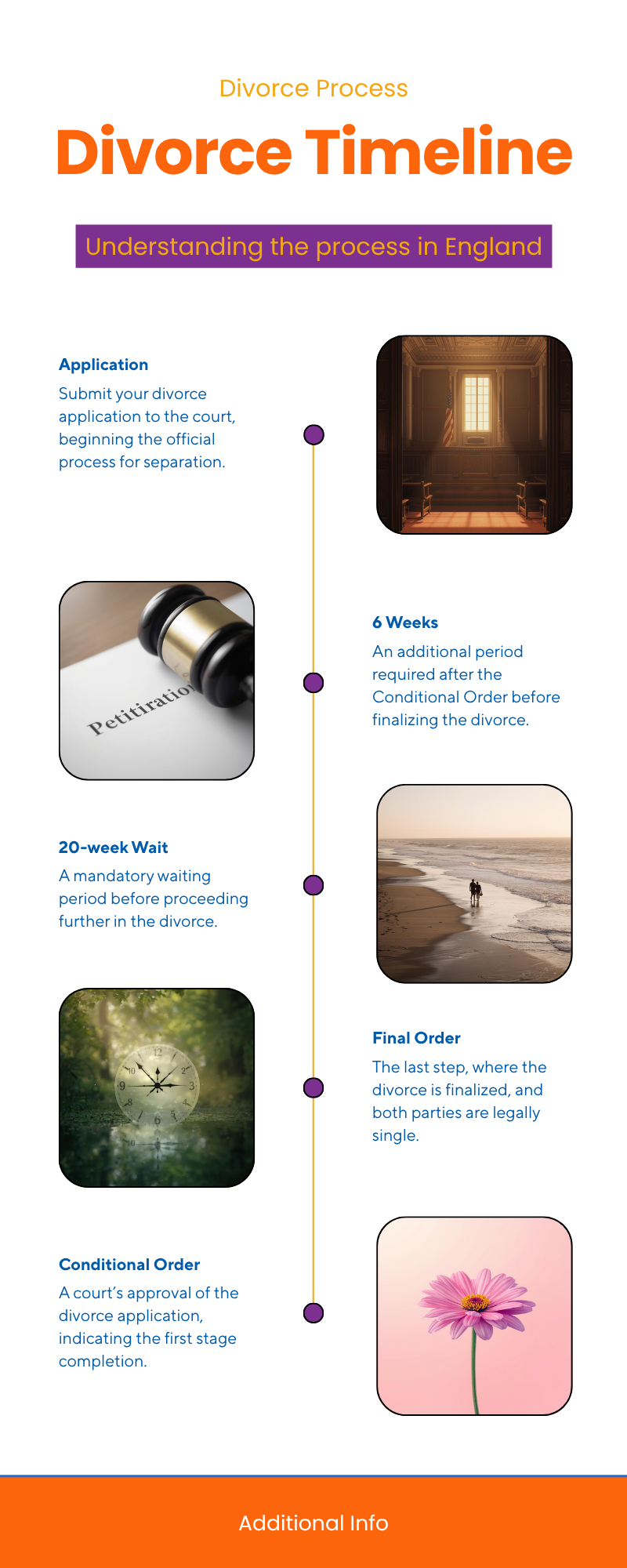
- After a minimum period of 20 weeks, you can apply for a conditional order, which is a provisional decree of divorce.
This “reflection period” is designed to allow couples time to reconsider reconciliation and start resolving financial and child arrangements.
Final Order:
- Following a six-week cooling-off period after the conditional order, you can apply for the final order, which legally ends the marriage.
Once the final order is granted, you are legally divorced and free to remarry. However, important legal rights, particularly relating to finances, may be lost if matters are not settled beforehand.
Financial and Child Arrangements:
- It is advisable to resolve financial matters and child arrangements before applying for the final order. Mediation is encouraged to reach an amicable agreement.
Financial arrangements may include the division of property, pensions, savings, and spousal maintenance. Child arrangements cover where children will live, contact schedules, schooling, and holidays.
Without a legally binding financial order approved by the court, former spouses may still be able to make financial claims against each other in the future.
How the Guide Can Help
The “Get a divorce: What happens after you apply” guide offers detailed information on each step of the process, including:
- Practical Tips: Guidance on completing forms and understanding legal terminology.
- Emotional Support: Advice on coping with the emotional aspects of divorce.
- Resources: Links to additional support services and legal advice.
It also explains common timelines, court communications, and what to do if your spouse does not respond to the application.
This guide is an invaluable resource for anyone navigating the complexities of divorce. It provides clarity and support, helping you make informed decisions during this difficult time.
For more detailed information, you can access the guide here.
When Should You Speak to a Family Law Solicitor?
Although the divorce process itself can be completed without legal representation, professional advice is strongly recommended where there are:
- Children under 18
- Disputes over finances or property
- International elements (e.g., overseas assets or residency issues)
- Concerns about domestic abuse or power imbalance
A family law solicitor can help protect your legal rights, negotiate fair financial settlements, and ensure any agreement is legally binding and enforceable.
Related Family Law Topics
You may also find the following guides helpful:
- Child Arrangements and Custody Agreements
- Financial Settlements on Divorce
- Prenuptial and Postnuptial Agreements
Divorce is never easy, but with the right information and support, you can navigate the process more smoothly. The government’s guide is a helpful tool to assist you every step of the way. Remember, you are not alone, and there are resources available to support you through this transition.
If you want advice on any matters relating to divorce, separation, children, or financial remedies, you can contact Tayo Taylor at tayo.taylor@mhhplaw.com or on 020 3667 4783.